
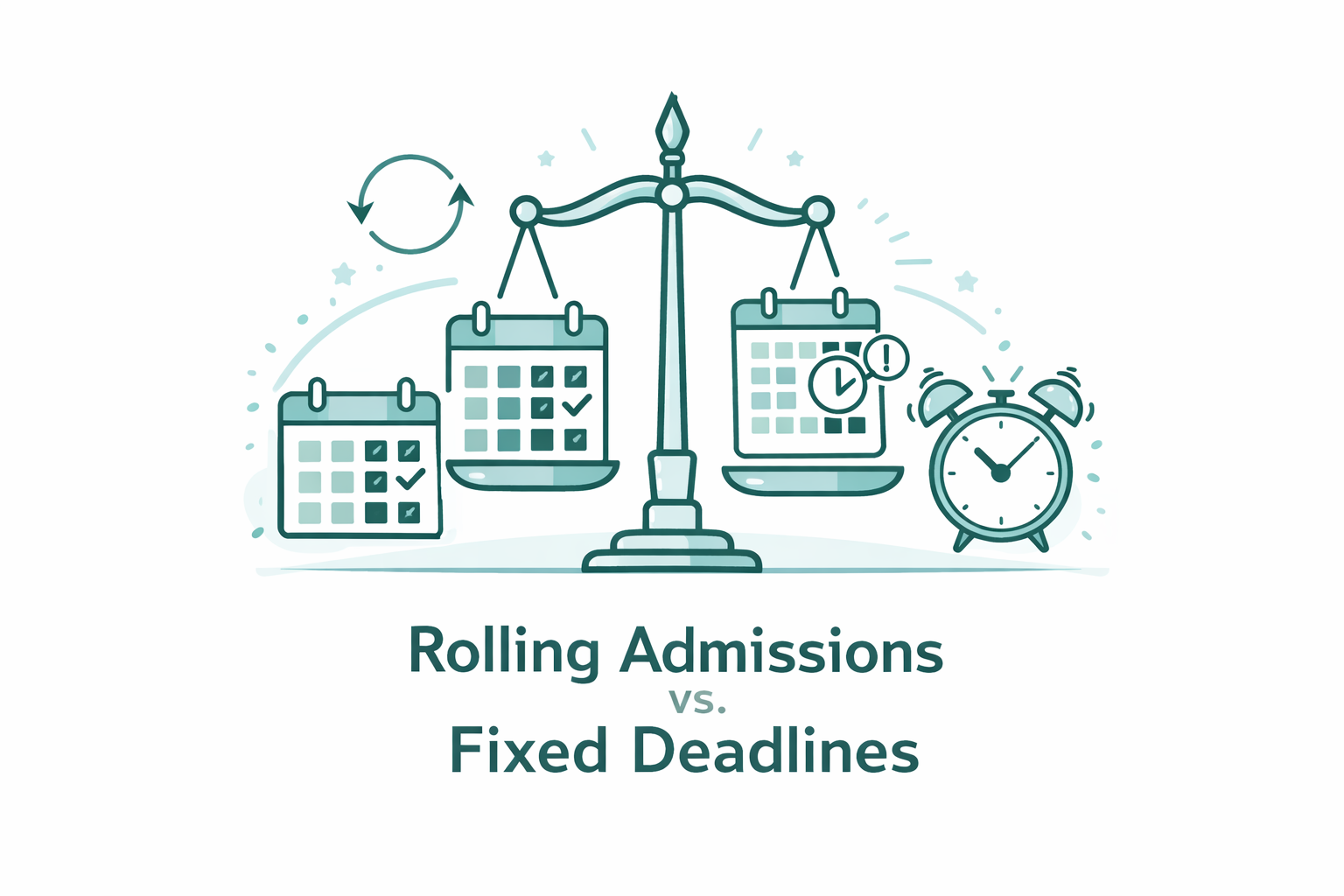
When you apply to a college or university, the admissions timeline matters more than many students expect. Two common approaches are rolling admissions and fixed deadlines. Understanding the difference can help you plan your application steps, avoid unnecessary stress, and keep more options open.
Rolling admissions means the school reviews applications as they are received. Instead of waiting for a single deadline and decision date, the institution makes decisions throughout the admissions cycle. In many cases, you can apply earlier and hear back sooner, which can help with planning, financial decisions, and comparing options.
However, rolling admissions does not mean “no deadlines.” Programs may still have priority dates for scholarships, housing, or course registration. Some programs also fill available seats over time, so applying earlier can matter even when rolling admissions is used.
Fixed deadlines mean the school has specific cutoff dates for applications. Applications are typically reviewed after the deadline, and decisions are released according to a schedule. This approach is common for selective programs or schools that manage admissions in set rounds.
Fixed deadlines can be easier to plan around because dates are clear, but they also require you to be organized. Missing a deadline may mean waiting for the next term or next cycle. For some programs, there may be multiple fixed deadlines (for example, early decision, early action, or regular decision), each with different timelines and expectations.
To decide which system works best for you, focus on your priorities. If you want faster feedback and flexibility, rolling admissions can be helpful—especially if you are applying while managing work or family responsibilities. If you are targeting programs with competitive admissions or limited seats, fixed deadlines may be more common, and planning ahead becomes essential.
A practical approach is to create a short list of the programs you are considering and note three dates for each one: the application deadline (or recommended timing for rolling admissions), financial aid deadlines, and the start date. With those dates in view, you can build a realistic plan and avoid last-minute decisions.